Pages

Showing posts with label free speech. Show all posts

Saturday, 7 January 2012

Spying for Big Coal

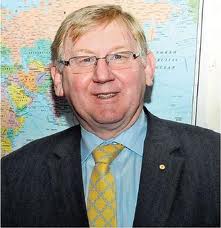
Martin Ferguson

Today the Age reported that the Federal government has been spying on Green groups, particularly environmental activists peacefully protesting at coal-fired power stations and coal export facilities. Martin Ferguson, the member for Batman and Minister for Resources and Energy, requested the additional surveillance, prompted by lobbying by the coal energy companies.

These companies are largely foreign-owned. Over the next five years, foreign-owned mining companies will ship some $50 billion per annum offshore in dividends.

Not content with their campaign against a tax on their super profits, these vast corporations are now using their influence to have Australian authorities covertly spy on their political opponents - and they have a ready supporter in Martin Ferguson.

This surveillance of community groups is one-sided: it is not directed at companies who break the law. There is no surveillance of board rooms to find out what other plans they might have to use their resources to alter the political debate in Australia. Nor is it being used to detect breaches of environmental laws by these companies. It is directed against the very community which should be sovereign in a democratic system.

You won't be able to find out if your group or your emails have been spied on. This would be exempted from disclosure under s 37 of the Commonwealth Freedom of Information Act. This means that the community will not be able to challenge the use of these covert powers in any specific instance.

The latest news follows revelations in 2008 that police have been infiltrating community groups and spying on them.

Community participation is at the core of democracy. Once we allow our "security" forces to undermine the freedom to participate in public life we are on the slippery slope to a different kind of regime. As Benjamin Franklin put it:
They who can give up essential liberty to obtain a little temporary safety deserve neither liberty nor safety.
Today we need the voice of the community like never before: the corporations trying to protect their position are jeopardising the future of humanity - and the Earth itself - with their dig it up and burn it approach, and the community is our last best hope.

The chill effect on community participation where government agencies are spying on participants is well known and makes it so much harder to act against the big carbon economy.

Democratic power requires community participation: it is the very essence of the idea of democracy that all can have a say, that all can seek to lobby, that all can seek to change laws and indeed their representatives.

For Martin Ferguson to be siding with big coal against the future of the planet is not surprising. It is consistent with his dreadful anti-environment record, including recently promoting the sale of uranium to India. And of course he's no stranger to protesters - because they have taken their campaigns right up to him.


Now he's been caught urging the use of covert government power to spy on those who have challenged him - and who have challenged the companies whose interests he has championed.

Spying on community groups is a hallmark of totalitarian regimes. It is an unaccountable use of power which undermines the foundation of democracy itself. Australia should not stand for it.


Wednesday, 1 September 2010

The Gunns 20


The Gunns 20 in Hobart
In mid 2004 I had lunch with Bob Brown to discuss some legal issues, and I gave him a copy of my book "Slapping on the Writs" about the use of strategic litigation to silence community groups.
On 13th December 2004 I was on my way up to Brisbane with my family for my niece's wedding. Our first night's stay was to be at Dubbo. I was just starting to unwind after a long drive, when I turned on my phone. It lit up with missed calls.
Then it rang: it was Bob Brown's adviser Marg Blakers. Had I heard the news? Australia’s biggest woodchipper and Tasmania’s largest company, Gunns Ltd, had just issued a writ out of the Supreme Court of Victoria against 20 (mostly Tasmanian) environmentalists, including Senator Bob Brown and the Wilderness Society. The writ claimed damages of more than $6 million for “corporate vilification” and “conspiracy to injure by unlawful means”.
I did some media interviews that night, and I'm sure I annoyed my family on that trip with long calls about strategy to various people whenever we were in mobile phone range.
My friend Dr Suresh Pathy, an anaesthetist, rang me when we were somewhere near Armidale. He was the secretary of Doctors for Native Forests - a Victorian group, and the twentieth Defendant: "They've got the wrong party!" he said. "We don't operate in Tasmania. The 19th Defendant is supposed to have said something on our behalf, but we don't know him. He's not part of our group, and he wasn't speaking for us."
In Tasmania, there is another group called "Doctors for Forests" which operates in Tasmania - there are no formal links between the two groups.
On 15th December 2004, two days after the writ was served, Gunns announced that it intended to build a large pulp mill in the Tamar valley. The reason for the issue of the writ now became obvious: it was intended to distract and silence opponents to its project.
The "Gunns 2o" as Bob Brown called the defendants, stood together in Hobart with tape over their mouths to symbolize the attempt to silence them. Many knew they stood to lose their homes from this litigation, and were in deep distress.
In due course I was briefed, along with Noel Russell, to act for Doctors for Native Forests. Vanessa Bleyer was our instructing solicitor.
The writ was extremely lengthy (227 pages). In the "Statement of Claim" which set out its allegations in detail, Gunns took exception, amongst other things, to conservationists’ correspondence with the Japanese buyers of Gunns’ woodchips in which they were asked to “review and cease … sourcing of native woodchips from Tasmania”. There was a complaint that representations were made to the Banksia environmental awards to oppose Gunns being included as a finalist. There were many complaints about public statements by opponents to logging.
All these actions of engaged citizens participating in the decisions that affected them were labelled conspiracy - it was a neat trick, redefining democracy as "conspiracy".
The statement of claim was bizarre, and included completely novel causes of action.
We wrote to EMA Legal, the solicitors for Gunns, and told them they had sued the wrong party.
Eventually a lengthy reply came, denying any mistake, and demanding damages and referring to a private email Suresh Pathy had sent to members of the group.
We asked them to pay half our costs to date, and gave them 7 days to think about it.
The first question to ask yourself about a statement of claim is: "Can I understand it? Do I know what the allegations are?"
It did not take long, looking at this convoluted and confused document, to realize that we had no hope of mastering what the case was against our client - Doctors for Native Forests - and we did not think any other defendant would be in any better position.
A team of counsel assembled to defend the writ. Most other counsel in the case were at first reluctant to take the step of applying to have the Statement of Claim struck out. In a long meeting in the chambers of Mark Dreyfus, Noel and I finally prevailed, and it was agreed by (most) other counsel to join us in the application to strike out the pleading.
The hearing was listed for 4th July 2005 - a Monday. After 5 pm on Friday 1st July (the last business day before the hearing) Gunns served us with a proposed amended Statement of Claim. This time it was 360 pages long, and even more complex.
Gunns expected us to seek an adjournment. They wanted to keep the bird aloft a bit longer, even though it didn't have a feather to fly with.
All weekend, to all hours, we worked on mastering the new document.
On the Monday morning counsel for Gunns announced that there would be yet further amendments, by way of "particulars" (this is where more detail is provided of specific allegations), and said that the material ought to be considered as a whole. He did not make clear what he was asking for but after ten pages of transcript the judge asked:
So you're seeking an adjournment effectively of today's application?
In a long answer, counsel for Gunns eventually conceded that he was. Counsel for the defendants opposed the adjournment, pointing out that we had been asking for particulars for months and had effectively received nothing, and did not expect anything further now.
The adjournment was refused.
We then argued the case for the remainder of the week. On 18th July the judge delivered his damming assessment of the Gunns writ - in both forms. It was struck out. The judge described it as "embarrassing", "confusing", "complex" and "unintelligible".
A third Statement of Claim was then delivered some months later. Again, we applied to have it struck out, and again the judge threw it out with a damning assessment.
The Gunns case was now in serious trouble. The adverse publicity had seen the Gunns share price plummet. Gunns sacked its lawyers and hired a new team.
At this point Gunns dropped the case against Doctors for Native Forests, and agreed to pay all costs.
The case then collapsed against a number of other defendants, including Bob Brown, and bit by bit the Gunns litigation unravelled.
Finally, on 1st February 2010, Gunns abandoned the case against the remaining four defendants, and agreed to pay them over $150,ooo in costs.
Gunns ended up paying several millions of dollars in costs to the defendants, to say nothing of what it paid to its own lawyers. But for many of the defendants it was an immense strain, imposing real financial and personal costs - just because they had stood up to a powerful company.
The Gunns litigation was a try on by well resourced plaintiffs who were determined to tie up their political enemies in court for as long as possible and as expensively as possible.
Litigation like this brings our legal system into disrepute, and should be outlawed by legislation.
External links
Wednesday, 25 August 2010

Being Forest Friendly


Alan Gray
My journey in relation to SLAPP suits began in 1999 when my friend Alan Gray rang me. It was the Thursday before Easter, and I was about to go on holidays. I could hear the fear in his voice. He sounded devastated. “Brian,” he said, “I’m not feeling good – all I have worked to build for my family – my house and my business – could go down the drain.”
Alan was then, and still is, the editor of Earth Garden magazine. He had written a book called “Forest-Friendly Building Timbers”. It was a consumers' guide to the ethical purchase of timber for various building needs - timber not sourced from native forests. BBC Hardware had agreed to stock the book throughout Australia.
Just before the close of business for the Easter holidays, when Alan was in Sydney for a launch of the book, the solicitors for the National Association of Forest Industries sent him a letter threatening to take him to court for deceptive and misleading conduct under the Trade Practices Act, because the book made a number of statements about the logging industry which they disputed.
The statements were all sourced and quoted from government reports. They were indisputable. And there were good statutory defences under the TPA anyway. But this would not matter – Alan Gray could not afford to bankrupt himself in order to prove he was right. Even a few days in court would be crippling.
NAFI demanded the shredding of all copies of the book, and an undertaking not to repeat any of these statements. Otherwise, off to the Federal Court. Alan, unable to face the prospect of even a short Federal Court hearing, was at the point of capitulation.
The irony was that the Trade Practices Act is meant to be about consumer protection, and the logging industry wanted to keep information from consumers to protect its own interests.
It was the modern equivalent of a mediaeval book burning.
I arranged for Alan to send the letter and the book immediately so I could look over them.
I rang back. Sometimes you have to have the courage of your convictions when you give legal advice. I said to him that he should not worry: the letter meant the book would enjoy greatly increased sales. We prepared a legal reply telling NAFI to "go jump" and then sent the correspondence to every journalist we could think of.
It got a run in every paper, and in many cases on the front page. Terry Lane on Radio National's "National Interest" interviewed Professor Allan Fels (head of ACCC) who offered the opinion that the NAFI letter itself may well amount to deceptive and misleading conduct, because anyone who knew the workings of the TPA would know that the threat they made was empty.
We dared NAFI to bring proceedings. They didn’t. The book was at the top of the non-fiction best seller list for months.
There was one dark aspect of the outcome. BBC Hardwares issued a press release which said:
BBC Hardware Limited today withdrew from sale in its stores a booklet titled “Forest-Friendly Building Timbers”.
This follows a threat of legal action against BBC Hardware by the National Association of Forest Industries, which took exception to the publication.[1]
NAFI’s threat of legal action was baseless. They did not even issue any proceedings. But still their threat pushed “Forest-Friendly Building Timbers” off the shelves of the major hardware chain which had supported it.
It’s a good example of the way some big business operators misuse the court system – frequently without even having to take proceedings. In this case we called their bluff, and that’s a good lesson in how to deal with SLAPP suits – stick together, go public, and don’t let them get away with it.

[1] BBC Hardware Media Statement 8 April 1999
External Links

Wednesday, 5 May 2010

Filtering Free Speech

Senator Scott Ludlam - leading the defence of the internet

Amid all the backflips being performed by the Rudd government, there's one backflip they refuse to perform: abandoning their failed internet filter policy. As recently as last week, the government confirmed it was "committed" to the policy.

All parents are concerned about the kinds of images which their children can access on the internet. It seems wrong. There are a range of commercial filters available, but the Rudd government proposes a mandatory filter of the whole internet system when accessed in Australia.

The Rudd filter will be largely ineffective. Filters can be circumvented readily, and much of the deeply offensive material in the internet - such as child pornography - won't be touched at all because this lurks in chat rooms or direct communications - not on sites which would be targeted.

This filter is likely to lull parents into dropping their guard - potentially causing more harm.


The government has carried out some pilot testing of its filter, but that testing is flawed. It was never tested at speed, and failed to meet the government's own criteria.

The filter will be expensive - $44.5 million is currently budgeted. This money could be far better spent on
  • educating parents and children on internet communication, on
  • policing illegal content - especially in the peer-to-peer networks which would not be touched by this proposal, and on
  • co-operation between ISP providers, police and government in targeting child sexual material.
Or parents could decide on their own filter arrangements at the computer itself.

The internet is now a vital medium of communication. We are all the writers, editors, publishers and readers. It is our post office and our film studio - and much more. It is a powerful force for democracy because it gives such unprecedented access to so many people to wide communication. Freedom of expression requires letting the internet function without the government setting up a system to vet it and control it.

No other western government has adopted a mandatory filter like this. We would be joining Saudi Arabia, Iran and China in a repressive approach to internet communication, and we are setting a very poor international example of respect for free speech. The US ambassador has strongly attacked Australia's proposed internet filter.

The government plans to filter out websites - but citizens will not know what websites are on the government's blacklist. We will never know what it is that government is keeping from us, and that means the power being exercised is unaccountable and open to abuse.

One of the perennial problems with this kind of proposal is "function creep". We set up a structure for one purpose, but then it is used for other things. Look at your driver's licence: once a simple piece of paper authorising you to drive on the roads, it is now equipped with a photo and signature, and used as identification for a whole range of purposes, including obtaining a passport. Let's assume a government is filtering the internet now with good intentions. What's to stop someone using this power in future with bad intentions? They could, for example, filter out political views with which they disagree. We would have no means of knowing, because the blacklist is secret.

The Rudd government's internet filter is a grave threat to free speech. It's not as though free speech is protected in Australia in other ways. We are alone among all western nations in not having legal recognition of the right of free speech, except in a few very limited circumstances. The government is pressing forward with its internet filter at the very time they have buckled to pressure not to pass a Human Rights Act, which would have given legal recognition to the right to freedom of expression.

Greens Senator Scott Ludlam has been leading the charge in parliament against the internet filter, backed up by several community organisations. Electronic Frontiers Australia has published a useful set of answers by Senator Conroy (the Minister responsible for the filter) to questions by Senator Ludlam.

Without open speech, there is no real democracy, because democracy depends on the free exchange of ideas and opinions - in any medium. Once you limit free communication between citizens, the powerful will manipulate public opinion, and we will lose the enrichment and greater wisdom that comes from communication with each other.

Let's keep the internet free.