Pages

Showing posts with label community groups. Show all posts

Saturday, 7 January 2012

Spying for Big Coal

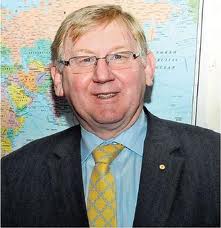
Martin Ferguson

Today the Age reported that the Federal government has been spying on Green groups, particularly environmental activists peacefully protesting at coal-fired power stations and coal export facilities. Martin Ferguson, the member for Batman and Minister for Resources and Energy, requested the additional surveillance, prompted by lobbying by the coal energy companies.

These companies are largely foreign-owned. Over the next five years, foreign-owned mining companies will ship some $50 billion per annum offshore in dividends.

Not content with their campaign against a tax on their super profits, these vast corporations are now using their influence to have Australian authorities covertly spy on their political opponents - and they have a ready supporter in Martin Ferguson.

This surveillance of community groups is one-sided: it is not directed at companies who break the law. There is no surveillance of board rooms to find out what other plans they might have to use their resources to alter the political debate in Australia. Nor is it being used to detect breaches of environmental laws by these companies. It is directed against the very community which should be sovereign in a democratic system.

You won't be able to find out if your group or your emails have been spied on. This would be exempted from disclosure under s 37 of the Commonwealth Freedom of Information Act. This means that the community will not be able to challenge the use of these covert powers in any specific instance.

The latest news follows revelations in 2008 that police have been infiltrating community groups and spying on them.

Community participation is at the core of democracy. Once we allow our "security" forces to undermine the freedom to participate in public life we are on the slippery slope to a different kind of regime. As Benjamin Franklin put it:
They who can give up essential liberty to obtain a little temporary safety deserve neither liberty nor safety.
Today we need the voice of the community like never before: the corporations trying to protect their position are jeopardising the future of humanity - and the Earth itself - with their dig it up and burn it approach, and the community is our last best hope.

The chill effect on community participation where government agencies are spying on participants is well known and makes it so much harder to act against the big carbon economy.

Democratic power requires community participation: it is the very essence of the idea of democracy that all can have a say, that all can seek to lobby, that all can seek to change laws and indeed their representatives.

For Martin Ferguson to be siding with big coal against the future of the planet is not surprising. It is consistent with his dreadful anti-environment record, including recently promoting the sale of uranium to India. And of course he's no stranger to protesters - because they have taken their campaigns right up to him.


Now he's been caught urging the use of covert government power to spy on those who have challenged him - and who have challenged the companies whose interests he has championed.

Spying on community groups is a hallmark of totalitarian regimes. It is an unaccountable use of power which undermines the foundation of democracy itself. Australia should not stand for it.


Monday, 21 June 2010

Building community - not empires


Carlton's Kathleen Syme Centre would be a great community facility


Kathleen Syme was a journalist and editor with The Age - the newspaper founded by her grandfather David Syme.

For many years Kathleen worked for the welfare of others - particularly women. She served on the board of the Royal Women's Hospital for decades, and in her honour its education centre (former Faraday Street State School No 112) is named the Kathleen Syme Education Centre.

The Women's Hospital has now moved to the corner of Grattan Street and Flemington Road Parkville, and Melbourne University wants to acquire the old hospital site.

Fair enough.

But will the university also be permitted to acquire the Kathleen Syme Education Centre?

Carlton has no public hall and no library. The Kathleen Syme Centre would be an ideal location for these services.

It is true that Melbourne University has a library, but it is not for locals. There is the State Library in the city, but that serves a rather grander function than a local library. There is a library in Rathdowne Street North Carlton, run by the City of Yarra. But for those in Carlton there is nothing.

Nor does the community have anywhere to meet. Meetings are often held at Melbourne University, but members of the public generally can't book space there - unless they are prepared to pay top dollar. Otherwise we have to go to the back rooms of pubs or to a church hall - such as St Jude's or the Church of All Nations - when public meeting space should be basic public infrastructure.

Carlton has a long and wonderful history - I lived for years next door to an elderly Italian couple, she having come out to Australia as a mail order bride in the 1930s. The football club (I confess I am not a supporter!) also has a proud history. Wouldn't it be great to have a place in the heart of Carlton to celebrate this heritage?

Carlton's postcode - 3053 - has the highest poverty rate of any postcode in Melbourne. It is an area that needs more community services, not less.

Carlton has never had its own local government, and it falls within the City of Melbourne. The City Council is willing and able to buy the Kathleen Syme Centre for a community space to meet the needs of Carlton residents. It has already done the same for Southbank and East Melbourne.

So what's the problem?

The problem is that the State government keeps blocking the acquisition. Formerly part of the Royal Women's, the Centre is currently under the control of the Minister for Health - Daniel Andrews. He and his Department don't want to sell one of their assets for community use.

It's empire building instead of community building.

When dealing with government assets, our government must take seriously the needs of the community.

External Links


Wednesday, 2 June 2010

Spying on the People

Just what kind of disguises do the police use?

In October 2008 “the Age” reported that police, just as in the days of the old special branch, are infiltrating community groups and reporting on their activities. This includes groups with no record of violence and a commitment against violence.

One officer from the Security Intelligence Group infiltrated groups such as Animal Liberation Victoria, Stop the War Coalition, Unity for Peace and Socialist Alternative.

The policeman posed as a vegan, left-wing activist, and had close contact with representatives of church and student groups involved in anti-war demonstrations. So successful was his operation that the organising committee for the Palm Sunday peace march in Melbourne appointed him its minute-taker at meetings.

The Palm Sunday event, held each year, has been attended by tens of thousands of Victorians opposed to war. It is organised and endorsed by a variety of groups across the community, including churches, students, unions and doctors.

Police rushed to justify this practice, and the State government also endorsed police infiltration of community groups. Police Minister Bob Cameron said the internal police controls covering the secret activities of the Security Intelligence Group were sufficient. "There is appropriate oversight in place as Deputy Chief Commissioner [now Commissioner] Simon Overland outlined."

It is possible that police spying on community groups gains them some useful information for fighting crime, but this activity plainly undermines the rule of law.

One of the features of democracy is that it encourages community participation. It is only as we have a market place of ideas that we can enrich each other and learn and grow as a society.

Having someone in a community group whose real purpose is to inform on that group has several effects. First, it means that the group is not so focussed on its task as would otherwise be the case. It is inevitably a distraction, because someone is there with an ulterior purpose. Secondly, if and when people find out about the police surveillance, they are discouraged from ever being involved in community activity again. They are left with a legacy of distrust. Why should they exercise their democratic rights if the result is that they will be treated as criminals? The chill effect spreads far beyond the immediate group itself. Thirdly, and perhaps most importantly, experience has shown again and again that there is a motive for people who inform on such groups to try to radicalise them, and work as agents provocateurs, and even falsify their reports to make their dull spying job seem more significant than it is. Often it is these informers who suggest using violence, or take the lead in anti-social activity.

Of course, all this police activity is completely selective, and one way. You won’t find the police infiltrating boardrooms where decisions are taken against which many community groups campaign.

And this interference with democracy is being done without any independent oversight. No judge issues a warrant. No report has to be given to a parliamentary joint committee. There is no opportunity for the community group to go to court to challenge this invasion of their activities.

What's worse, due to a 2006 amendment - see s 31(3) - to the Freedom of Information Act, you can't find out about what the police have done. Recently I've been asked by a number of community members to get their police files, but have been met with the objection - based on this amendment - that the documents have been created by the Bureau of Criminal Intelligence or the Intelligence and Covert Support Department of the Victoria Police. This covers all documents created in the process of spying on the community.

This spying by the police interferes in legitimate political participation in a way that cannot be justified in a democratic community.

The rule of law doesn’t just mean having laws – even tyrants have laws. The rule of law is a check on the arbitrary exercise of power. A central feature of the rule of law is that it allows the courts to stand between the citizen and the government and determine disputes between them. Courts protect the citizen from arbitrary abuse of power. Where a community group does not even know it is being infiltrated, it cannot call on the courts to help.

We have a choice in governing our society – a choice between some having unbridled power – the rule of the despot, the rule of whim - and a society with clear laws which provide checks to the exercise of power - the rule of law. It is, at heart, the choice between tyranny and democracy.

Police spying on community groups is a key feature of totalitarian regimes. It is an unaccountable exercise of power which fundamentally undermines the rule of law, because it undermines the democracy on which the rule of law is founded.